CigarAficionado.com
2010
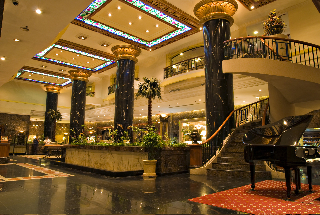
After eating only local exotic Malaysian cuisine at outdoor and open-air restaurants for several days in Borneo, a steamy land only a few degrees north of the equator, I discovered an oasis of other world flavors at the regal Merdeka Palace Hotel. The experience soothed the spirit and literally cooled the body.
The Merdeka is centrally located in Kuching, the capital city of Sarawak, Malaysia’s largest state. It commands a royal presence overlooking the famed Padang Merdeka–a parade field originally built in 1920 where Sarawak together with Sabah (the only other state in Borneo) proclaimed independence from British rule in 1963 and joined the Federation of Malaya to form Malaysia.
The Merdeka Palace’s Italian Ristorante Beccari’s baroque’ décor with high ceilings, marble floors, frescoed walls depicting Italian hillside vistas and glossy wood trim accentuate the restaurant’s spacious layout and define its casual elegance.
Dining with Andrew Law, Merdeka’s F&B Manager began with a selection from the ample cellar. More than 200 varieties are housed in the conveniently located Yn Cellar on the mezzanine level. Bottles of 2006 Veramonte Vineyard, Sauvignon Blanc–an affordable, refreshing white from Chile’s Casablanca Valley conveyed a clean and complex flavor of peachy melon and citrus aromas. It paired well with both the classic style Caesar salad and a made-on-premises Merdeka Pizza appetizer.
I opted for a house specialty entrée–Filetto Di Manzo–two 100-gram, rosemary and garlic marinated tenderloin fillets with potato, carrot, and sugar snap peas in a light porcini mushroom sauce. The tender, juicy, perfectly grilled cut was highlighted by a pleasing blend of spices and sauce. A 2004 Cabernet Sauvignon from Howard Park Leston Wineries in Western Australia’s Margaret River was an exceptional compliment to the main dish. The crimson red’s earthy aroma of black currant and blackberries, hints of chocolate and mild tannins filled the nose and palate.
We adjourned to the secluded La Habana Cigar Divan for après dinner treats. The den like setting was at first a bit of a sensory overload. Displayed in a glass-fronted humidor were some 60 brands of primarily Cuban, Dominican and Columbian cigars with nearby shelves showcasing 45 different Scottish single malts.
Freshly finished wood floors, glass-door cabinets trimmed in hunter green and numerous colorful cigar box tops adorning the walls contributed to highlighting a down home tropical feel. Siti Faizah, La Habana’s supervisor, got me started with a 4.5 inch Romeo Y Julieta Corona and poured a glass of 1991 Imperial Whiskey, a fine smooth vintage Scottish single malt that seemed to match sip for draw with the Corona’s mellow flavor. Some time later, I finished the night with another from Castro’s island, a Punch Coronation and an additional elegant whiskey from the old country.
Merdeka Palace offers its upscale international visitors plenty of options. In addition to La Habana and Becarri there’s Aurora Court for authentic Malaysian food, the Victoria Arms, an English pub with live nightly entertainment, and Seattle Coffee & Tea, a relaxing café serving a line-up of international coffees, teas, sandwiches and desserts.
The interior design of the hotel’s 200 rooms and apartment suites reflects a Malaysian colonial style. Merdeka’s center city locale is ideal for exploring historical sites, museums and the Main Bazaar, renowned for its handicraft shops. Kuching is a comfortable blend of the modern and the traditional where native people practicing ancient ways serenely coexist within contemporary society and commerce.
After the gastronomic detour at Becarri, it was exclusively Malaysian fare for the remainder of my trip. I enjoyed some old favorites, like the slow-cooked gelatinous oxtail meat featured in oxtail soup, considered a delicacy and a preferred breakfast of roti canai with dahl–a puffy tortilla-like flat bread with fried eggs and onion served and of curries on the side. The zesty yellow dhal sauce made from lentils, yellow split peas or chickpeas and a variety of spices is a traditional regional mainstay.
Flavors of chili, curry, coconut milk, lemongrass, ginger, tamarind, tumeric, cumin and coriander are common to Malaysian victuals, a cuisine influenced by the multi-ethnic population of Malay, Chinese, indigenous tribal, Indian, Thai and Indonesian.

Ristorante Beccari 
Wine Cellar 
La Habana Cigar Divan 
Merdeka Palace Hotel